

Understanding Saddam Hussein CIA Iraq Through The Achilles Trap
The Achilles Trap: Saddam Hussein, the C.I.A., and the Origins of America’s Invasion of Iraq by Steve Coll is a 2024 nonfiction book that runs about 576 pages and studies the ties between Saddam Hussein CIA Iraq relations from his rise in 1979 to the 2003 war; it explains Saddam’s grip on power, his fear of threats, and his decision to project strength, while also showing how the United States made errors in U.S. Iraq relations, misread motives, and let CIA intelligence failures shape policy; Coll asks why Saddam allowed the belief that Iraq weapons of mass destruction still existed, how propaganda and secrecy deepened mistrust, and how CIA Iraq history reveals a pattern of poor judgment; the book argues that Saddam’s use of repression, image, and fear, combined with American overconfidence and wrong assumptions, trapped both sides into a path that ended in the Iraq invasion 2003; this study offers readers insight into the history of Saddam Hussein and America while showing how pride, fear, and missteps on both sides drove events that changed the region.
About the Author
Steve Coll is a journalist and author with a sharp eye for the hidden corners of history. He has spent years unraveling the complexities of international relations and intelligence. His work is rooted in facts and detailed investigation, yet it’s never dry. He won a Pulitzer Prize for his reporting on the CIA and its covert operations. His writing cuts through the noise, telling stories that matter. Coll’s books bring together the threads of politics, war, and the unseen forces shaping the world. His work on Ghost Wars is a testament to his ability to explain the tangled web of global conflict with clarity and precision.
Saddam Hussein CIA Iraq Book Review
Steve Coll’s The Achilles Trap looks at Saddam Hussein CIA Iraq relations from the late 1970s to the 2003 invasion. The book studies how Saddam built power, how the United States reacted, and how both sides misunderstood each other. Coll uses archives, interviews, and government records to show a clear story about leadership, fear, and wrong choices.
The book begins with Saddam’s rise. His Saddam Hussein biography is full of control, violence, and loyalty tests. He built a system where he was the center. The book explains how this system worked and how it shaped his rule. Coll shows how Saddam created an image of strength to keep rivals away and to warn outside enemies.
One part of the book focuses on U.S. Iraq relations. Washington struggled to understand Saddam’s goals. At times the U.S. saw him as a barrier to Iran. At other times, he looked like a direct threat. The back-and-forth nature of these ties shaped much of the tension that grew in the Middle East.
A strong theme is CIA Iraq history. The agency tried to read Saddam, but the effort often failed. Reports misread his plans and overstated his military power. These mistakes led to wrong policies. Coll shows how errors built up over time, making it hard for leaders to trust what they read. This weakness grew worse in the 1990s when weapons became the main issue.
The section on Iraq weapons of mass destruction is central. Saddam did not stop the belief that he held them. He thought fear helped his image inside Iraq and outside. But this choice made the U.S. more certain that war was needed. Coll explains how CIA intelligence failures pushed this idea. The result was the Iraq invasion 2003.
Coll writes about Saddam and America in clear terms. The book does not praise Saddam, nor does it spare the U.S. He shows how each side made choices that fed mistrust. This view helps the reader see why the war happened even if both sides could have avoided it.
The review must ask: does the book work? Yes. Coll gives facts and context. He explains events step by step. Readers learn about the history of Saddam Hussein and America in detail. The strength of the book is its balance. It avoids simple blame. It points to pride, fear, and poor judgment as key forces.
There are some limits. The book is long, and at times details can weigh down the story. Some readers may want more on the war itself, but Coll stops short of long battle reports. His focus is the years before, and in that goal he succeeds.
The Achilles Trap matters today. It shows how leaders can fall into wrong paths when trust and clear facts are missing. For anyone who wants to understand the Iraq War origins, this book is strong. Steve Coll gives us a story of power, mistakes, and lessons for the future.
Steve Coll’s The Achilles Trap gives a sharp look at Saddam Hussein CIA Iraq ties and the choices that led to the 2003 invasion. The book shows how fear, pride, and wrong steps on both sides shaped history. If you want to understand the true story behind the Iraq War, read this book and share your thoughts with others who study power and conflict.
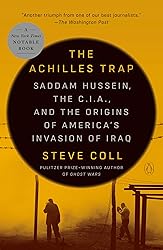
Saddam Hussein CIA Iraq Book Details

This book gives the full story of the long and troubled ties between the United States and Saddam Hussein, showing how misjudgment and pride set the course for war. It begins with the 2003 invasion of Iraq, when leaders claimed Saddam held weapons of mass destruction. No such weapons were found, and the search for answers began. The book asks why Saddam risked his rule by spreading fear of hidden weapons that did not exist. The story follows decades of failed choices and missed chances, where American leaders and Saddam both made grave mistakes. Drawing from private papers, interviews, and Saddam’s own words, the book shows how fear, pride, and flawed intelligence drove policy on both sides. It reveals how Saddam’s grip on power relied on threat and myth, and how American leaders saw those myths as fact. The writer shows how both sides lived in a cycle of distrust that built a case for war that need not have happened. This work explains how power and misread intent can cause loss and shape history. It is a clear and forceful study of choices that left Iraq in ruins and reshaped America’s place in the Middle East.
My Goodreads Review
The Achilles Trap: Saddam Hussein, the C.I.A., and the Origins of America’s Invasion of Iraq by Steve Coll
My rating: 4 of 5 stars
This book shows how two sides misread each other and set the stage for war. The story blends new records, taped talks, and firsthand notes with sharp detail. The writer gives clear scenes that show both power and fear at work. Each page builds tension and makes the history feel close. The result is a strong look at choices that changed a nation and the world.
View all my reviews

