

Lessons from the Battle of Arnhem in Cornelius Ryan’s Classic
Cornelius Ryan’s A Bridge Too Far tells the story of the Battle of Arnhem, a major event during World War II that showed the limits of planning and courage. The book explains how Allied forces tried to capture key bridges in the Netherlands under Operation Market Garden, hoping to end the war sooner. Ryan uses clear facts and real stories from soldiers, officers, and civilians to show the fear, bravery, and cost of war. His writing connects large military moves with human struggle, showing how ambition and error shaped the outcome. A Bridge Too Far turns the failure of the Battle of Arnhem into a lasting study of leadership, sacrifice, and endurance.
About the Author
Cornelius Ryan was an Irish journalist and author who wrote some of the most respected books about World War II. He was born in Dublin in 1920 and worked as a war correspondent during the conflict. His firsthand experience shaped his understanding of soldiers and strategy. Ryan built his career through clear writing and careful research. He gained fame with The Longest Day, a book about D-Day, before writing A Bridge Too Far, which focused on the Battle of Arnhem and Operation Market Garden. His work joined storytelling with history, giving readers a human view of war. Ryan died in 1974, leaving behind a legacy as one of the finest war historians of his time.
Battle of Arnhem Book Review
Cornelius Ryan delivers a powerful and clear account of the Battle of Arnhem in A Bridge Too Far. The story covers one of World War II’s most daring plans — Operation Market Garden. The goal was simple: let the Allied forces capture several bridges in the Netherlands and strike into Germany. Ryan shows how the plan fell apart through poor timing, wrong intelligence, and strong German army defense. His focus stays on people — the soldiers who fought, the leaders who made hard choices, and the civilians who suffered through the chaos.
Ryan builds his story through facts and human voices. He draws from reports, letters, and memories. The result feels real and close. You can see the fear of British paratroopers dropping behind enemy lines. You feel the frustration of the commanders as they realize the plan will fail. The Battle of Arnhem becomes more than a military event. It becomes a story of courage, limits, and learning from mistakes.
The book’s strength lies in its clear storytelling. Ryan writes with purpose. Each chapter explains what happened and why. There is no confusion. Every action connects to a person or a decision. The Allied forces had high hopes, but the bridges became traps. The German army fought with skill and discipline. In the end, thousands of lives were lost, and the mission failed. Yet Ryan does not judge. He lets the facts speak.
Readers who enjoy military strategy will find much to study here. Ryan shows how planning can break under pressure. The soldiers followed orders, but war often ignores plans. The Battle of Arnhem stands as proof that bravery alone cannot win without clear communication and strong supply lines. It is also a reminder of the cost of overconfidence.
The human side of the story adds heart to the book. Ryan’s writing honors both the winners and the defeated. The British paratroopers, cut off and surrounded, fought with honor. Civilians gave food and shelter even as shells destroyed their homes. These details turn A Bridge Too Far from a war record into a lasting story about human endurance.
For readers of Cornelius Ryan or those who follow World War II history, this book is essential. It blends the truth of history with the emotion of firsthand stories. It explains how the Operation Market Garden plan, meant to end the war early, became a lesson in caution. The Battle of Arnhem remains one of the war’s most studied failures — and one of its most moving tales of bravery.
In simple words, A Bridge Too Far is more than a story of soldiers. It is a story of people who believed, fought, and fell for an idea of victory. It shows the thin line between success and disaster in war. Ryan’s work endures as a tribute to the courage that defined that tragic bridge.
Cornelius Ryan’s A Bridge Too Far remains one of the finest accounts of the Battle of Arnhem and World War II history. The book gives readers a clear look at courage, failure, and leadership under fire. If you enjoy stories that reveal the truth behind great battles and the people who fought them, read this timeless classic and experience the power of history told through real lives.
Battle of Arnhem: A Bridge Too Far Movie Version
The 1977 film A Bridge Too Far, directed by Richard Attenborough, gives a vivid and faithful view of the Battle of Arnhem and Operation Market Garden. Based on Cornelius Ryan’s book, it follows the Allied forces as they try to capture key bridges in the Netherlands during World War II. The movie features Sean Connery, Anthony Hopkins, Robert Redford, Michael Caine, and Gene Hackman, who portray generals, soldiers, and leaders caught in a failed mission. Each scene shows the strain of command and the courage of men fighting against strong German army defenses. Large battle scenes and real locations create a clear picture of how hope turned into loss. The film ends with defeat but keeps respect for those who fought and died. A Bridge Too Far stands as a powerful visual record of the Battle of Arnhem, giving viewers a direct link to the history that Ryan captured in his writing.

Related Books:
- “The Longest Day” by Cornelius Ryan (Published in 1959)
- “Band of Brothers: E Company, 506th Regiment, 101st Airborne from Normandy to Hitler’s Eagle’s Nest” by Stephen E. Ambrose (Published in 1992)
- “D-Day: June 6, 1944: The Battle for the Normandy Beaches” by Stephen E. Ambrose (Published in 1994)
- “Panzer Commander: The Memoirs of Colonel Hans von Luck” by Hans von Luck (Published in 1989)
- “The Forgotten Soldier” by Guy Sajer (Published in 1967)
- “Stalingrad: The Fateful Siege, 1942-1943” by Antony Beevor (Published in 1998)
- “Deliver Us From Darkness: The Untold Story of Third Battalion 506 Parachute Infantry Regiment during Market Garden” by Ian Gardner, Mario Dicarlo
Battle of Arnhem Book Details

Cornelius Ryan’s A Bridge Too Far gives a clear and gripping account of the Battle of Arnhem, one of the most intense fights of World War II. The book describes how Allied forces launched Operation Market Garden in 1944, using the largest airborne assault ever attempted to capture bridges across the Netherlands and break through to Germany. Ryan shows how American and British troops dropped behind German army lines with courage and hope, only to face strong defenses, failed communication, and harsh resistance. He follows generals, soldiers, and Dutch civilians, showing their strength and fear in equal measure. The story unfolds through action and human struggle, as plans collapse and bravery turns to loss. The mission that began as a bold attempt to end the war became a disaster that cost the Allies nearly twice as many casualties as D-Day. Ryan’s writing brings readers close to the chaos of battle and the cost of leadership under fire. A Bridge Too Far stands as a record of courage, failure, and endurance, showing how ambition and sacrifice shaped the Battle of Arnhem and left a lasting mark on military history.
My Goodreads Review:
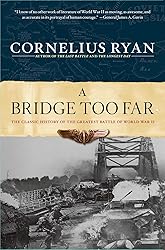
A Bridge Too Far: The Classic History of the Greatest Battle of World War II by Cornelius Ryan
My rating: 5 of 5 stars
When I was very young, I remember reading the condensed version of this book in Reader’s Digest. I also saw the movie version. Now in 2022, I re-watched the film again. So I thought, why not read the whole book? So I did. It is interesting to know in detail the events leading into one of the greatest failures of the Allied army during WW2. Got me to think about the what ifs.
View all my reviews


