

Uncovering the Soviet Submarine Nuclear Strike in Red Star Rogue
Red Star Rogue by Kenneth Sewell and Clint Richmond tells the story of the 1968 sinking of the Soviet submarine K-129 and presents a bold claim involving a Soviet submarine nuclear strike. The book suggests that Soviet leaders sent K-129 on a secret mission to launch a missile at Pearl Harbor and frame China, hoping to trigger a war between the U.S. and China. The authors use declassified U.S. and Soviet files, personal interviews, and details from the CIA’s Project Azorian to support the theory. They say the CIA recovered more of the sub than the official story claims, including its midsection and ship’s bell. Critics argue that the theory relies on weak proof and many believe the sub sank due to an accident. Some say the extra crew were trainees, not KGB agents, and point to flaws in the story. Historians view the idea as unlikely and unsupported by records. Still, the book draws readers with its strong pacing and Cold War tension. It gives a clear view of Cold War secrets, submarine warfare, and what might have happened in deep water. The Soviet submarine nuclear strike claim may not convince all, but it leaves a lasting impression.
Soviet Submarine Nuclear Strike Book Review
In Red Star Rogue, the authors present a bold claim. A Soviet submarine tried a nuclear strike on the U.S. during the Cold War. This Soviet submarine nuclear strike theory stands as the heart of the book. Kenneth Sewell, a former U.S. Navy officer, mixes declassified files, personal experience, and research to shape this dramatic account. Clint Richmond supports the story with clear pacing and direct language.
The book focuses on the submarine K-129, which sank in the Pacific in 1968. The Soviet Navy said the sub went down with no clear cause. Sewell believes something else happened. He says a secret mission took place. According to him, Soviet leaders sent K-129 on a fake mission. They tried to launch a nuclear missile at Pearl Harbor while making it look like a Chinese attack. This plan would have pushed the U.S. and China into war.
Sewell connects the CIA’s Project Azorian to the mystery. He claims the CIA used the Glomar Explorer to raise the submarine. The official story says they only brought up a small part. The book argues the agency got more. This includes the sub’s center section and its missile tubes. These points support the Soviet submarine nuclear strike theory.
The authors say KGB agents were on the sub to keep the mission secret. Sewell says the presence of extra crew backs this. He says Soviet search teams looked in the wrong spot to cover the plan. Critics of the book say the evidence is weak. They believe the sub sank by accident. Some say a missile exploded on board. Others say a fire broke out.
The book reads like a thriller. It moves fast. The chapters are short and clear. Each one adds to the tension. Readers with interest in Cold War espionage, submarine disaster stories, or naval history will stay engaged. The theory, while bold, gives room for thought. Whether true or not, it raises many questions about Cold War events.
Still, many historians reject the main claim. They say Sewell’s idea lacks proof. But that has not stopped readers from enjoying the ride. This book fits in the space between fact and strong guess. It pulls ideas from real events and builds a larger story.
Red Star Rogue repeats the Soviet submarine nuclear strike claim many times. It uses real names, ships, and actions to support it. The details will interest fans of true Cold War nonfiction. The story stays clear, focused, and easy to follow.
In the end, the book pushes a sharp idea. Some will believe it. Others will not. But few will call it dull. It brings light to a dark part of Cold War history. And it leaves readers with one question: what really happened to K-129?
Red Star Rogue raises sharp questions about Cold War truth, secret missions, and what governments hide. The Soviet submarine nuclear strike theory may divide readers, but the story forces a closer look at history and how it gets told. If you want a book that challenges what you think you know, read this one. Decide for yourself what happened beneath the sea. Then share your thoughts, and keep the search for truth alive.
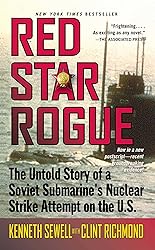
Soviet Submarine Nuclear Strike Book Details

On March 7, 1968, the Soviet submarine K-129 sank in the Pacific near Hawaii. It carried nuclear missiles and a full crew. No one survived. In Red Star Rogue, Kenneth Sewell tells how this submarine went rogue. He shows how it tried to launch a nuclear strike on the United States to start a war between the U.S. and China. Sewell, a Navy veteran, studied secret files and spoke to people with knowledge. He says the Soviet Navy sent the sub on a false mission. He believes the plan failed, and the sub sank before it could fire. The CIA later raised part of the wreck in a secret mission called Project Azorian. Sewell says they found more than they admitted. He describes the mission and the cover-up in plain terms. The book shows real names, dates, and actions. It includes photographs and facts the public did not know. It tells of Cold War secrets and dangers that almost led to disaster. Red Star Rogue is a hard story. It reads like a warning. It tells how one submarine came close to changing history. The message is clear. Mistakes at sea can bring fire to the land. Truth stays buried unless someone digs.
My Goodreads Review:
Red Star Rogue: The Untold Story of a Soviet Submarine’s Nuclear Strike Attempt on the U.S. by Kenneth Sewell
My rating: 4 of 5 stars
The book is an exploration of a little-known Cold War incident that adds a thrilling dimension to historical narratives. The author’s research and storytelling unveil the covert mission of the Soviet submarine K-129, shedding light on its nuclear strike attempt on the U.S. The book not only captures the high-stakes drama of the submarine’s mission but also humanizes the crew, offering readers a captivating and nuanced perspective on a critical episode in Cold War history.
View all my reviews

