

How Constantine’s Sword Explores Christianity and Antisemitism History
“Constantine’s Sword” by James Carroll examines the long and difficult connection between Christianity and antisemitism history. The book presents a challenging argument. Carroll, a former priest, traces a path of theological conflict. He starts with the early Christian texts. He moves through centuries of Church doctrine. Carroll identifies a crucial turning point. He argues Emperor Constantine merged Church and state power. This fusion created a “sword” for persecution. The book links this ancient history to the Holocaust. It is a personal and scholarly work. Carroll demands a full reckoning with this past. This exploration provides critical insight into a dark legacy. It remains a vital and sobering read today.
About the Author
James Carroll is an American author, historian, and former Catholic priest. He was born in Chicago in 1943 and grew up in a devout Catholic family. He studied theology and literature before entering the priesthood, where he served for several years before leaving to focus on writing. Carroll writes about faith, history, and moral conflict, often drawing on his background in the Church. His work explores how belief shapes culture and how institutions can harm or heal. He wrote several acclaimed books, including Constantine’s Sword, An American Requiem, and House of War. His voice blends personal experience with moral inquiry, urging readers to face history with honesty. Carroll continues to speak and write about religion, justice, and the human need for truth.
Christianity and Antisemitism History Book Review
James Carroll’s Constantine’s Sword is a hard book to read but a necessary one. He writes about faith, power, and guilt in a way that makes readers stop and think. The story of Christianity and antisemitism history runs deep through his pages. Carroll, once a Catholic priest, looks at how the Church’s actions shaped its relationship with the Jewish people across two thousand years.
The book starts with Emperor Constantine, who turned Christianity into the religion of the empire. Carroll says that was when faith gained a sword. The cross changed from a sign of sacrifice into a mark of authority. From then on, the Catholic Church history moved closer to control and away from compassion. The early message of love turned into rules, and the blame for Jesus’ death fell on the Jews. Carroll shows how this idea fed hate that lasted through generations.
As the story moves forward, Carroll writes about the Crusades, the Inquisition, and the long years of Jewish persecution in Europe. He does not soften his words. He tells how priests and kings used faith as a weapon. He also writes about the silence of Church leaders during the Holocaust and Christianity, when millions died while many looked away. His words are clear and simple, which makes their truth cut deeper.
The “monumental” New York Times bestseller in which a Catholic explores the problem of anti-Semitism through Church history.
The Washington Post
Carroll links history to belief. He explains how theology and politics often mixed. The Church wanted power, and that power came with fear. He writes about Christian antisemitism history not as dry lessons but as choices made by real people. Some chose mercy; others chose hate. That is what gives this book its weight—it reminds us that history is made by moral acts, not by fate.
The personal voice in this book stands out. Carroll’s faith is still alive, but it carries doubt. He loves the Church but wants it to change. He asks for truth, for the Church to face its part in religious intolerance history. He also talks about Vatican and Jewish relations after the war, when new leaders began to speak of peace. Carroll believes that this dialogue must continue if both sides are to heal.
What makes the book strong is its honesty. Carroll does not write like a scholar hiding behind long words. He writes like a man trying to understand. His research is wide, but his tone stays human. He speaks of pain, memory, and the hope that faith can still guide people toward good.
“A triumph.”
Atlantic Monthly
By the end, Constantine’s Sword feels like both a confession and a call. Carroll wants readers to see how the Church and the Jews share a story that still shapes the present. The book is history, but it is also a warning. It says belief must never lead to hate again. Through plain truth and courage, James Carroll gives voice to a past that must not be forgotten.
Constantine’s Sword urges readers to face the history between the Church and the Jews with honesty and courage. It reminds us that faith should bring compassion, not division. Carroll’s message calls for reform and understanding. Read this book to see how truth can heal and guide belief toward peace.
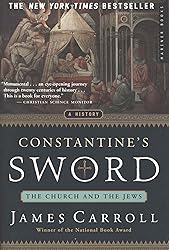
Christianity and Antisemitism History Book Details

James Carroll’s Constantine’s Sword: The Church and the Jews, A History examines how Christian belief shaped centuries of hatred toward Jews. He connects early Gospel accounts that blamed Jews for Jesus’ death to Constantine’s transformation of the cross into a sword, showing how faith joined with power to breed fear. Carroll explains how blood libels, scapegoating, and modern antisemitism grew from these roots and led to tragedy. He argues that the Catholic Church’s silence during the Holocaust, including the inaction of Pope Pius XII, reflects a deeper moral failure formed over time. Yet Carroll does not write only about blame; he shows that different choices could have been made. He recalls forgotten voices who stood for truth and calls readers to remember them. His book exposes how Christianity and antisemitism history shaped the Church’s conflict with the Jews and with its own conscience. Carroll urges Christians to face this truth and rethink their faith. He believes that understanding the past can lead to peace between Christians and Jews. This history is both painful and necessary, and Carroll’s message is clear: faith must lead to justice, not oppression, if there is to be hope for a new future.
My Goodreads Review:
Constantine’s Sword: The Church and the Jews by James Carroll
My rating: 4 of 5 stars
The book is a compelling and thought-provoking exploration of the complex relationship between the Catholic Church and the Jewish people throughout history. With a meticulous examination of historical events, the author traces the roots of anti-Semitism and highlights the ways in which the Church has contributed to the persecution and discrimination of Jews over the centuries. The title metaphorically refers to the sword of Constantine, the Roman Emperor whose conversion to Christianity played a pivotal role in shaping the course of Western history. James Carroll, a former Catholic priest, infuses personal reflections into the narrative, adding a poignant layer to the historical analysis. The book is a well-researched and insightful account that not only sheds light on the historical dynamics between Christianity and Judaism but also prompts readers to contemplate the broader implications of religious intolerance and its impact on the course of human civilization.
View all my reviews

