

The Core of Personal Computer History
“Fire in the Valley” tells the story of the personal computer. Authors Paul Freiberger and Michael Swaine cover the early years. They focus on the key people and companies. The book shows the start of this industry in garages and labs. It explains the rise of giants like Apple and Microsoft. The story also includes the later struggles and changes in the market. This history gives a clear view of a major technological shift. It connects the past inventions to the computers we use now.
About the Authors:
Michael Swaine is an American author, editor, and software developer. He has written numerous books and articles on computer programming and technology, establishing himself as an expert in the field.
Paul Freiberger is a technology journalist and author who has written extensively about the history and impact of the personal computer.
Fire in the Valley — Book Review
The book Fire in the Valley delivers a strong account of a major technical change. This Fire in the Valley book review will examine its story. The book explores the explosive growth of the personal computer history. Authors Paul Freiberger and Michael Swaine trace this progress. They start with simple circuit boards. They end with global companies. The narrative captures a true computer revolution. This change reshaped work and life for millions of people.
What This Book Is About
The origins of the personal computer
This book explains the roots of the PC. It was not a product from a big corporation. It came from hobbyists and engineers. These people had a dream. They wanted a computer for every person. The authors show this slow start. They describe the first crude machines. These machines had tiny memory and no screens. The story makes the later success more impressive.
Early hackers, hobbyists, and visionaries
The book focuses on people. It profiles key tech pioneers. You meet figures like Steve Wozniak and Bill Gates. The text also covers lesser-known inventors. These people shared ideas freely. They formed clubs and wrote newsletters. This community spirit fueled early growth. The drive came from curiosity, not just money.
How Silicon Valley culture emerged
The book maps the birth of a special place. Silicon Valley became the center for this work. The narrative shows why this area succeeded. It had universities, investors, and chip makers. A culture of risk-taking took root. Failure lost its shame. This environment let small groups challenge big companies. The PC industry found its home here.
The Birth of the Personal Computer
Homebrew Computer Club
A key group pushed the revolution forward. The Homebrew Computer Club met in a garage. Members showed their latest projects. They traded schematics and code. Steve Wozniak found inspiration here. He designed the Apple I for this club. This circle of friends built the first wave of PCs. Their cooperation was vital.
Apple, Microsoft, and early competitors
The story follows the rise of famous names. Apple history begins in a family garage. The Microsoft history starts with a simple programming language. The book details their early battles. It also covers rivals like Commodore and IBM. The authors explain the fight for standards and software. These conflicts decided the market’s winners.
The role of risk and experimentation
No one knew the future of the PC. Big companies like IBM dismissed the idea. Young founders took all the risk. They built companies with little cash. They tried new designs and new software. This period required bold experiments. Many attempts failed. A few changed everything. The book captures this tense, creative time.
The Culture That Changed Technology
Garage startups
The first companies did not have offices. They worked in garages and bedrooms. This fact is central to the myth of Silicon Valley. The book shows this reality. Teams worked long hours for passion. They built machines by hand. This direct, hands-on method defined the era. It stood in stark contrast to corporate labs.
Collaboration vs competition
The early culture mixed both forces. Tech pioneers shared knowledge openly. They also fought fiercely for business. The book presents this balance. Collaboration sped up basic invention. Competition refined products for the public. This dynamic created better, cheaper computers fast.
Why innovation moved fast
Several factors combined for speed. Cheap microprocessors were available. A generation knew how to code. Venture capitalists offered funding. There was also a huge market need. The book connects these points. It shows how the right mix of parts let innovation explode. The personal computer history moved at a breakneck pace.
Why the PC Revolution Almost Failed
Corporate takeovers
Success attracted big business. Established companies entered the market. IBM made its own PC. Other firms copied the IBM model. The control of the PC industry started to shift. The original inventors lost influence. The book describes this crucial turn.
Loss of creativity
The market demanded standardization. This demand hurt creative freedom. Computers became more alike. The focus moved to marketing and cost. The playful spirit of the early clubs faded. The authors note this change with clear regret. The revolution became a business.
Market pressures
Financial forces shaped the later years. Companies fought price wars. Many early firms closed. Survivors like Apple faced hard times. The story does not end with total victory. It ends with a settled, less exciting industry. This honest look gives the book more weight.
Strengths and Weaknesses
Strengths: Storytelling, historical detail
The book’s main strength is its story. The authors build a clear and human narrative. They fit many characters into one timeline. The historical detail is deep and well-researched. Readers feel the energy of the time. The account of this computer revolution is both exciting and complete.
Weaknesses: Dated tech references (but still valuable)
The book first appeared in 1984. Later editions added new chapters. Some technical descriptions feel old. Terms like “microprocessor” and “memory” need no explanation today. This point is a minor issue. The core story of people and ideas remains powerful and relevant. The book’s value as history is secure.
Who Should Read This Book
Tech enthusiasts will love the origin story. It covers the machines that started everything.
Silicon Valley fans will understand how this unique culture formed.
Entrepreneurs and founders can learn from the early struggles and wins.
Readers of innovation history will get a classic case study. They will see how a big idea becomes real.
Final Verdict
Fire in the Valley is a essential story. It is the definitive history of the personal computer history. The book documents the dreams, fights, and wins of the tech pioneers. It captures the chaotic birth of Silicon Valley and the global PC industry. While some tech notes are old, the human drama is timeless. This account of the computer revolution earns a strong recommendation. Anyone who uses a modern computer should know this tale. The book receives a rating of 5 out of 5 stars.
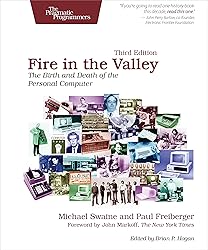
Books Related To Personal Computer History:
- “The Innovators: How a Group of Hackers, Geniuses, and Geeks Created the Digital Revolution” by Walter Isaacson
- “Accidental Empires: How the Boys of Silicon Valley Make Their Millions, Battle Foreign Competition, and Still Can’t Get a Date” by Robert X. Cringely
- “Insanely Great: The Life and Times of Macintosh, the Computer that Changed Everything” by Steven Levy
- “The Technological Society” by Jacques Ellul
- “The Shallows: What the Internet Is Doing to Our Brains” by Nicholas Carr
- “The Glass Cage: Automation and Us” by Nicholas Carr
Fire in the Valley [BOOK DETAILS]

In the 1970s, many people saw computers as tools of oppression. But a different group saw opportunity. This collection of college dropouts, hippies, and electronics fans did something radical. They wanted computer power for themselves. Starting in their garages, they turned a hobbyist movement into an industry. That industry sparked a social and technological revolution. They invented the personal computer. This was more than a new device. It changed how people relate to machines forever. This is their story.
Fire in the Valley is the definitive history of the personal computer. Authors Swaine and Freiberger interviewed the people who made it happen. As veteran computer writers, they witnessed the revolution firsthand. While working at InfoWorld in the early 1980s, they interacted with Steve Jobs and Bill Gates as it happened.
The book profiles unlikely revolutionaries and entrepreneurs. It features figures like Ed Roberts of MITS, Lee Felsenstein at Processor Technology, and Jack Tramiel of Commodore. It also shows Steve Jobs and Bill Gates in their formative years.
This third edition is completely revised and expanded. It chronicles the end of the personal computer revolution and the start of the post-PC era. It covers the departure of major players like Steve Jobs and Douglas Engelbart, and the retirements of Bill Gates and Steve Ballmer. It details the shift from the PC to the cloud and portable devices. Finally, it examines what the end of the PC era means for personal freedom, power, and the debate between open source and proprietary software.
My Goodreads Review:
Fire in the Valley: The Birth and Death of the Personal Computer by Michael Swaine
My rating: 5 of 5 stars
I love how this book was written. Brought me back in time.
View all my reviews

